Virtual Power Plants: Get Paid to Power the Grid
How ComEd's New Battery Storage Program Can Work For You
A new ComEd program, spurred by Illinois energy legislation, can allow customers with home battery storage systems to profit if they are willing to let the utility tap into their battery during peak usage times.
From an upfront rebate on the battery itself to annual compensation for allowing the utility to tap into your battery, the program provides benefits to consumers while at the same time easing strain on the area's power grid.
Learn more about virtual power plants and what they can mean for you:
What is a Virtual Power Plant?
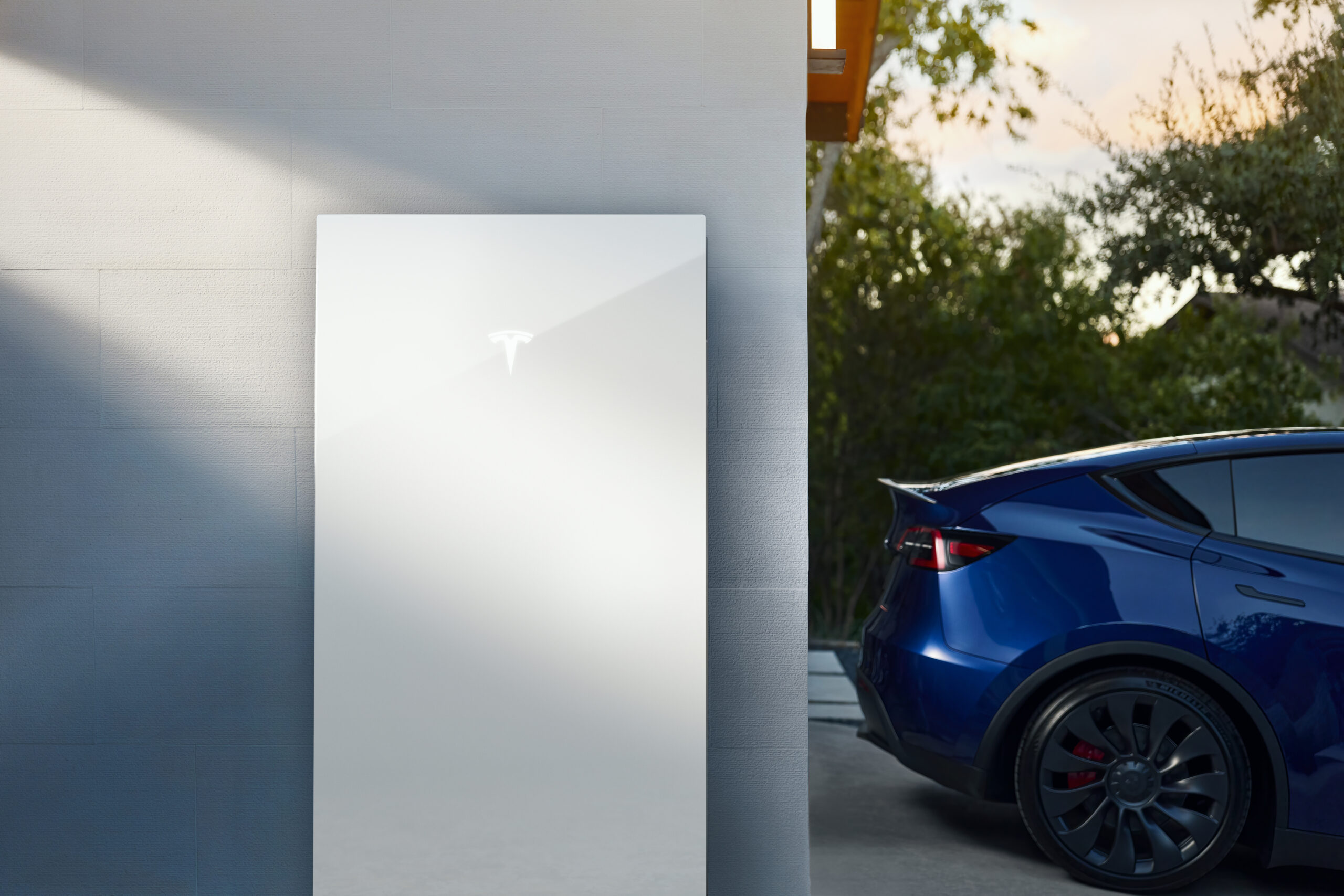
A Virtual Power Plant (VPP) isn’t a building — it’s a network. When hundreds (or thousands) of homeowners with battery storage systems agree to share a small portion of their stored energy during peak demand periods, those batteries together act like a single large power plant feeding the grid.
ComEd can then tap into that network on hot summer afternoons or during unexpected grid stress events — reducing the need to fire up expensive backup power plants and keeping electricity costs lower for everyone.
The result for you: a new way to earn money from a battery you already own — or a compelling new reason to install one.
The Illinois CRGA Act — What Changed
In January 2026, Governor Pritzker signed the Clean and Reliable Grid Affordability Act (CRGA) into law. One of its key provisions requires ComEd to launch a formal Virtual Power Plant program — and it comes with real financial incentives for participating customers.
The Illinois Commerce Commission (ICC) is finalizing the program rules, with the program expected to launch by June 30, 2026.
The Gateway: ComEd’s Hourly Pricing Rate (Rate BESH)
Before diving into the benefits, there’s one important step to understand: to qualify for both the battery rebate and the VPP program, customers need to be enrolled in ComEd’s Hourly Pricing rate — also called Rate BESH (Battery Energy Storage with Hourly pricing).
Instead of paying a fixed rate per kWh regardless of when you use electricity, hourly pricing means your electricity cost changes hour by hour based on real-time grid conditions. Rates are typically very low (or even negative) overnight and in the early morning, and higher during peak demand hours.
For battery owners, this is actually a good thing. Your battery can automatically charge itself during the cheapest overnight hours, then power your home (and discharge to the grid during VPP events) during the expensive peak hours. The result is lower electricity bills on top of the rebate and VPP payments.
Think of it like buying gas when it’s cheap and driving when prices are high — except your battery does it for you, automatically.
Enrolling in hourly pricing is free and can be done directly through ComEd. It’s a straightforward switch that unlocks everything below.
What’s In It for You with Virtual Power Plants?
Once on hourly pricing, three financial benefits stack on top of each other:
1. Upfront Battery Rebate — $300 per kWh
(ComEd Distributed Generation Rebate)
When you purchase and install a qualifying home battery storage system and switch to hourly pricing, you’re eligible for a $300 per kWh rebate on the nameplate capacity of the battery.
Example: A 13.5 kWh Tesla Powerwall = $4,050 back in your pocket at purchase.
2. Ongoing Annual VPP Compensation
(ComEd VPP Program)
Once enrolled, you earn an annual payment for committing your battery’s power capacity to the VPP program. This is a capacity-based payment — meaning you’re compensated for making your battery available to ComEd, not per individual dispatch event.
How dispatch events work: ComEd calls on the VPP during peak demand periods — typically a 3:00–6:00 PM window, Monday through Friday, primarily during the summer months (roughly May through October). Expect anywhere from 30 to 60 dispatch events per year, each lasting up to a couple of hours. Your battery handles everything automatically; you won’t notice anything in your home during these events.
How the payment is calculated: The CRGA Act sets a minimum floor of $10 per kW of average dispatch power per year. This is based on the average kilowatts your battery contributes across all dispatch events — not multiplied directly against your battery’s kWh storage size.
Real-world example using a single Tesla Powerwall 3:
For two Powerwall 3s:
Important context: The $10/kW figure is the statutory minimum floor set by the CRGA Act. ComEd’s new tariff, due to be filed by June 1, 2026, may set a higher rate. The monthly figures above are conservative estimates based on current law.
The VPP payment on its own is modest — but it’s one piece of a much larger financial picture. When combined with the upfront rebate and ongoing bill savings from hourly pricing, the total annual value to the customer is significantly higher (see the summary table below).
3. Peak-Hour Energy Export Credits — The Big Opportunity for Solar Owners
(Rate BESH Net Metering — especially valuable if you already have solar)
This is where the financial picture changes significantly — and it’s the reason adding a battery is such a smart move for homeowners who already have solar panels.
On ComEd’s standard net metering, excess solar power exported to the grid is credited at a low fixed rate — roughly the utility’s avoided cost, which is well below what you pay per kWh. You’re essentially selling power back at wholesale prices whether it’s noon or 5 PM.
On Rate BESH (hourly pricing), it works differently. Exports are credited at the real-time market price at the exact hour they occur. During peak summer afternoons — right when VPP dispatch events happen — those prices can be dramatically higher:
~1–4¢/kWh
Minimal
~5–10¢/kWh
Moderate
~20–30¢/kWh
Significantly higher
Can spike to $1+/kWh
Exceptional
Here’s the problem without a battery: Solar panels generate the most power midday when prices are average — and your home has already exported that power long before the 3–6 PM price spike hits.
Here’s the opportunity with a battery: Instead of exporting surplus solar power at midday rates, your battery stores it and releases it during the high-value late afternoon peak window. You’re effectively selling the same solar energy at 3–6× the price — and getting the VPP capacity payment on top of it.
ComEd’s own data shows that solar customers on hourly pricing save an average of 30% on energy supply costs compared to the standard fixed rate — and that’s before factoring in strategic battery dispatch during peak hours.
If you already have solar and don’t yet have a battery, adding one now positions you to:
- Capture peak-hour export value that your system is currently missing
- Qualify for the $300/kWh upfront battery rebate
- Enroll in the VPP program for the annual capacity payment
- All while switching to BESH at no cost
4. Ongoing Bill Savings from Hourly Pricing
(Rate BESH Benefit — battery-only customers)
Even without solar, a battery on hourly pricing can lower your monthly bill by charging automatically during cheap overnight hours (sometimes as low as 1–2¢/kWh or even negative) and covering your home’s peak-hour usage — so you’re buying less power at the expensive times.
The combination of all benefits can significantly improve the payback period on your battery investment.
How Does Participation Actually Work?
Here’s the simple version of what enrollment looks like:
- Install a qualifying battery storage system (like a Tesla Powerwall) through a certified installer like Red Star Electric.
- Switch to ComEd’s Hourly Pricing rate (Rate BESH) — a free rate change through ComEd that also qualifies you for the $300/kWh upfront battery rebate.
- Apply for the Distributed Generation (DG) battery rebate — Red Star Electric can help you with this paperwork.
- Enroll in the VPP program through ComEd or an approved aggregator once the program launches (mid-2026).
- Commit your battery to a dispatch window — a defined period (typically peak hours) when ComEd may call on your battery.
- Go about your day. Your battery management system handles the dispatch automatically.
- Earn your annual VPP payment — compensated based on the capacity you committed, regardless of how often dispatches actually occur.
Your home stays protected. The program is designed so your battery still covers your home’s needs — you’re sharing a portion of stored capacity, not all of it.
What Does the Total Package Look Like?
Here’s how the financial benefits stack up — with a special look at the solar + battery scenario:
Scenario A: Battery Only — No Solar (1 Tesla Powerwall 3)
~$4,050
One-time, at installation
$50/yr ($4/mo)
Annual
$100–$200/yr ($8–$17/mo)
Ongoing
~$4,200–$4,300
~$150–$250/yr
Scenario B: Existing Solar + Adding 1 Tesla Powerwall 3
~$4,050
One-time, at installation
$50/yr ($4/mo)
Annual
$300–$600/yr ($25–$50/mo)
Ongoing, monthly bill credit
~$4,400–$4,700
~$350–$650/yr
The peak-hour export estimate above assumes a typical 7–10 kW solar system storing and dispatching one full Powerwall charge per peak event across ~40–50 summer dispatch days at average peak prices of 20–25¢/kWh. Actual earnings vary based on system size, peak prices, and dispatch frequency.
Scenario C: Existing Solar + Adding 2 Tesla Powerwall 3s
~$8,100
One-time, at installation
$100/yr ($8/mo)
Annual
$500–$1,000/yr ($42–$83/mo)
Ongoing, monthly bill credit
~$8,700–$9,200
~$600–$1,100/yr
All estimates are illustrative. VPP capacity payment is based on the CRGA statutory floor of $10/kW of average dispatch — the actual rate may be higher once ComEd files its final tariff by June 1, 2026. Peak-hour export earnings depend on real-time hourly prices, solar system size, battery capacity, and the number of qualifying dispatch events in a given year. Figures will vary by household and are not guaranteed.
Red Star Electric is a certified installer for Tesla Powerwall and SPAN smart panels — two of the best-suited systems for VPP participation in Illinois.
Why Choose Red Star Electric?
Red Star is:
- Certified Tesla Powerwall Installer — manufacturer-trained and authorized
- Certified SPAN Smart Panel Installer
- Licensed, Bonded & Insured — Chicago electrical licenses, OSHA 30 certified
- Top 5% of Illinois Contractors — BuildZoom score of 108
- End-to-End Project Management — permits, load calculations, inspections, rebate assistance
- Lifetime Labor Warranty on all our work
- Consistent 5-Star Reviews from homeowners across Chicagoland
We don’t just install equipment — we make sure your home’s electrical system is fully ready to support it, and we help you take advantage of every available incentive along the way.
Ready to Get Started?
The VPP program is launching soon, and installations are filling up fast. The earlier you install, the sooner you’re positioned to enroll and start earning.
Information is based on the Illinois CRGA Act (signed January 2026) and publicly available ICC filings as of May 2026. ComEd’s original Rider VPP tariff was withdrawn in November 2025 after the CRGA Act passed; a new tariff is due to be filed by June 1, 2026. Final program details, compensation rates, and eligibility rules are subject to ICC approval. Annual VPP payment estimates reflect the statutory minimum floor of $10/kW of average dispatch and may be higher once the final tariff is set. Red Star Electric does not guarantee specific rebate or payment amounts. Customers should verify current program terms with ComEd at the time of enrollment.
Frequently Asked Questions About Virtual Power Plants
Why the SPAN Smart Panel Is a Smart Add‑On
The SPAN smart panel is a next-generation electrical panel with built-in energy monitoring and automated circuit control. It’s designed to work seamlessly with battery storage systems — making it the ideal companion for VPP participation.
With SPAN, your home can:
- Automatically prioritize critical circuits during dispatch events
- Monitor real-time energy usage and storage levels
- Give you full visibility and control from your phone
Red Star Electric is a certified SPAN installer.